
Commercial Heat Pump vs. Gas Furnace: Which Actually Costs Less Over Time?
Posted by Chris Craft- NES Retrofit Distributors on May 6th 2026
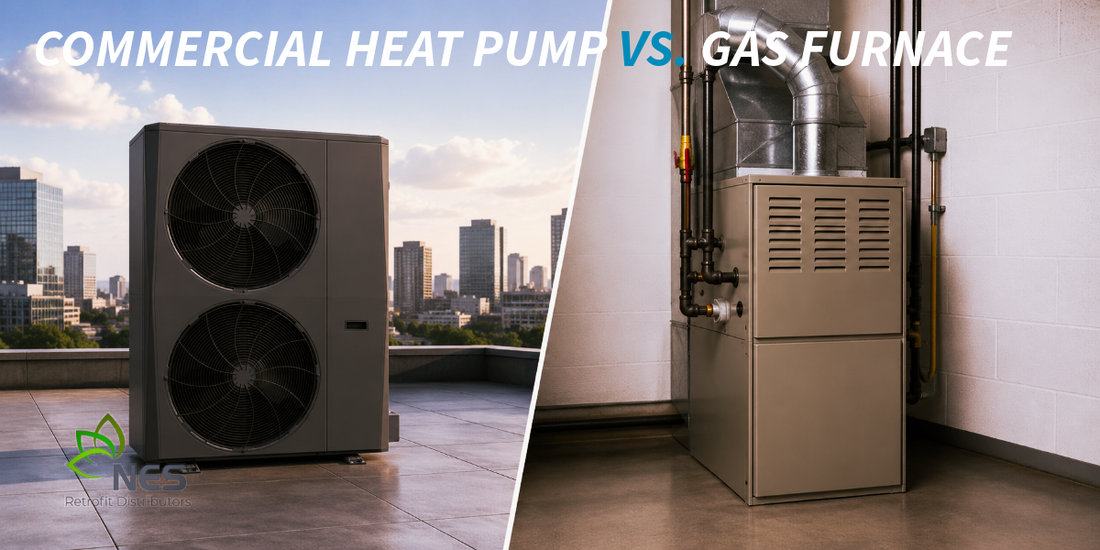
When it comes to heating commercial spaces in Massachusetts, the decision between a heat pump and a traditional gas furnace is no longer straightforward.
For years, gas furnaces dominated the market, especially in colder climates. But today, rising fuel costs, electrification policies, and significant state incentives are shifting the equation.
For homeowners, contractors, and business owners, the real question is no longer “Which system is cheaper upfront?”
It’s: “Which system delivers the lowest total cost and best performance over time?”
This guide breaks down the true lifetime cost comparison, performance in cold climates, and when each system makes the most sense, so you can make a data-driven HVAC decision.
Heat Pump vs. Gas Furnace: What’s the Difference?
Before comparing costs, it’s important to understand how these systems operate.
Heat Pumps
Heat pumps don’t generate heat, they transfer heat from the outside air into your building. Modern cold-climate air-source heat pumps are engineered to perform even in freezing temperatures.
Key advantages:
- High efficiency (can deliver 2–4x more energy than they consume)
- Heating and cooling in one system
- Lower emissions and electrification-ready
Gas Furnaces
Gas furnaces generate heat by burning natural gas or propane.
Key advantages:
- Strong heating output in extreme cold
- Lower upfront installation cost (in many cases)
- Familiar technology for many contractors
-
Upfront Cost Comparison
At first glance, gas furnaces often appear more affordable.
Typical Installation Costs (Commercial / Light Commercial)
- Gas Furnace: Lower initial cost
- Heat Pump System: Higher upfront investment (equipment + installation)
However, this comparison is incomplete without factoring in Massachusetts incentives.
The Incentive Factor (Massachusetts Advantage)
Programs like Mass Save significantly reduce the upfront cost of heat pumps through:
- Rebates for air-source heat pumps
- Whole-building electrification incentives
- Financing options for efficiency upgrades
In many cases, these incentives can close the upfront cost gap—or even make heat pumps competitive with gas systems.
-
Energy Cost Comparison: The Real Game-Changer
The biggest difference between these systems shows up after installation on your monthly energy bills.
Gas Furnace Operating Costs
- Dependent on natural gas prices (which fluctuate)
- Lower efficiency compared to heat pumps (especially older units)
- Higher long-term fuel exposure
Heat Pump Operating Costs
- Uses electricity—but at much higher efficiency
- Can reduce overall energy consumption significantly
- Works even better when paired with:
- Improved insulation
- Weatherization
- Smart controls
Massachusetts Reality
With increasing focus on electrification and energy efficiency:
- Electricity pricing structures are evolving
- Incentives continue to favor efficient electric systems
- Gas infrastructure costs are expected to rise over time
Bottom line:
Over the lifetime of the system, heat pumps often deliver lower and more predictable operating costs, especially in well-designed installations.
2. Performance in Cold Climates: Do Heat Pumps Really Work in Massachusetts?
One of the most common concerns is performance during harsh New England winters.
Modern Cold-Climate Heat Pumps
Today’s systems are designed specifically for regions like Massachusetts:
- Maintain strong performance in low temperatures
- Some systems operate efficiently even below 0°F
- Variable-speed compressors adapt to demand in real time
Gas Furnace Strength
Gas furnaces still have an advantage in:
- Extreme cold spikes
- Facilities with very high heating loads
- Buildings without proper insulation
What Actually Matters More
System performance isn’t just about the equipment—it depends on:
- Proper system sizing
- Installation quality
- Building envelope (insulation, sealing)
- Controls and zoning
A well-designed heat pump system will outperform a poorly installed gas furnace every time.
3. Maintenance and Lifecycle Costs
Gas Furnace
- Requires regular maintenance (burners, heat exchangers, venting)
- Potential safety considerations (combustion, gas leaks)
- Typically shorter lifespan in high-use environments
Heat Pump
- Fewer combustion-related maintenance issues
- Dual-function system (heating + cooling reduces system redundancy)
- Longer operational efficiency when maintained properly
Over time, heat pumps tend to offer:
- Lower maintenance risk
- Simplified system management
- Reduced downtime
4. Environmental and Regulatory Considerations
Massachusetts is actively pushing toward building electrification and emissions reduction.
Why This Matters for Your Decision
- Future regulations may impact gas usage
- Electrification incentives are likely to expand
- Businesses are increasingly prioritizing sustainability
Heat pumps align with:
- Lower carbon emissions
- ESG (Environmental, Social, Governance) goals
- Long-term compliance strategies
Gas systems, while still viable, may face:
- Increasing regulatory pressure
- Higher long-term infrastructure costs
5. Lifetime Cost Comparison: What Actually Wins?
When evaluating total cost, consider:
Gas Furnace Lifetime Costs
- Lower upfront cost
- Higher and variable fuel costs
- Ongoing maintenance
- Potential future compliance costs
Heat Pump Lifetime Costs
- Higher upfront cost (offset by incentives)
- Lower operating costs
- Reduced maintenance risks
- Future-proofed against electrification trends
In many Massachusetts scenarios, heat pumps come out ahead on total lifecycle cost, especially when incentives and energy savings are fully considered.
A heat pump is often the better choice when:
✔ You want lower long-term energy costs
✔ You’re planning a new build or major retrofit
✔ You want to take advantage of Massachusetts incentives
✔ Your building has (or will have) good insulation and weatherization
✔ You’re aiming for sustainability or electrification goals
The biggest mistake in HVAC decision-making is focusing only on the product.
High-performing projects depend on:
- Accurate load calculations
- Proper system sizing
- Integration with building systems
- Incentive alignment
- Long-term operational planning
This is where working with an experienced partner becomes critical.
Whether you’re evaluating a full electrification upgrade or a hybrid HVAC strategy, our team helps you make the right decision based on performance, cost, and long-term value.
The question is no longer “heat pump vs. furnace.”
It’s
“Which system delivers the best long-term outcome for your building?”